Marriage as a woman's career
The Second SexMarriage as a woman's career is the social and economic arrangement by which marriage becomes a woman’s practical route to support, respectability, and adult status rather than one life possibility among many. Its force lies in the contradiction: marriage promises a home and material security, but when women are denied comparable ways to earn and live independently, that promise can reproduce dependence. The book therefore treats marriage not simply as a private bond, but as an institution shaped by economic inequality, sexual convention, and the unequal assignment of reproductive and domestic labor.
Economic dependence and the marriage choice
For many women, marriage is presented as a solution to a restricted field of alternatives. A peasant woman who remains unmarried may be confined to service in her father’s or brothers’ household, while moving to a city can be virtually impossible. In some bourgeois families, daughters are not equipped to earn a living and face a choice between remaining dependent at home and taking a poorly paid position in another household. Even a woman with greater freedom may be encouraged to marry a man whose economic prospects exceed her own. Under these conditions, the decision is not made on equal terms: marriage can be materially more attractive than a career, especially when women’s occupations are badly paid and offer little security.
Marriage also supplies recognition that independent earnings do not necessarily secure. In the account of American social expectations, a woman living alone may remain incomplete in the eyes of society even if she supports herself; marriage gives her a recognized adult standing. Motherhood, too, is respected chiefly within marriage, while an unmarried mother faces scandal and her child becomes a serious social and practical disadvantage. The ring thus marks not only a personal relationship but access to rights and dignity that are withheld from women outside the institution.
This arrangement shapes young women’s expectations before they marry. Asked about their future plans, many girls still answer that they want to marry, while no young man is described as treating marriage as his fundamental project. A man’s economic success can establish his adult respectability with or without a wife; for a woman, marriage is more often presented as the route to a complete social position. The imbalance is captured in the book’s contrast between fewer male demands and a continuing supply of women seeking husbands: the young woman is expected to attract a proposal rather than respond to a call made on equal terms.
Sexual convention and the marriage market
Economic incentives are reinforced by a sexual double standard. The woman’s body is treated as capital she may exchange for support, while traditional morality legitimizes her dependence on a husband. She may bring a dowry or contribute housework and child care; in return, she has a socially sanctioned claim to be supported. The book notes the resulting temptation to view marriage as a more advantageous career than many of the poorly rewarded occupations open to women. What appears to be a private bargain is therefore structured by unequal access to income and by the social value assigned to marriage.
Women’s sexual freedom is also restricted by conventions that make marriage a gateway to adult respectability. In France, a wife’s adultery remained a crime until comparatively recently, while unmarried women faced barriers to openly pursuing sexual relationships. Some young bourgeois women marry in order to gain the freedom denied to them as single women. American women may have achieved greater sexual latitude, but the account still describes an expectation that they will marry before being fully regarded as adults. In both settings, sexual independence does not reliably remove the pressure to enter marriage; it may simply postpone it.
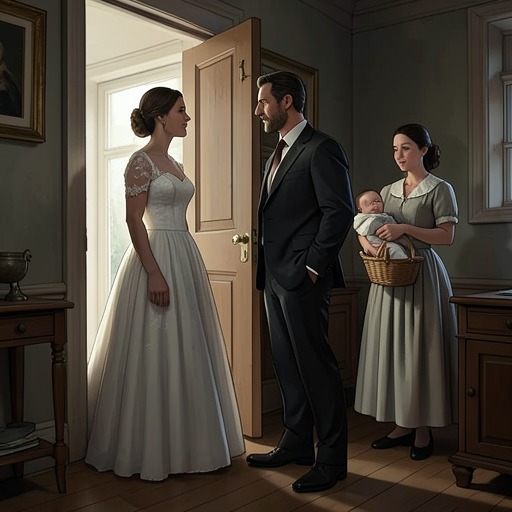
The marriage market is not always left to individual choice. Arranged marriages persist among some bourgeois families, and the young woman is made to present herself as a candidate while her parents remind her of the expense of introducing her to potential husbands. Her prospects are understood to diminish as she ages, and her freedom of choice is compared to that of a young Bedouin woman exchanged for livestock. The scene makes visible how the language of courtship can mask a transaction: a woman without fortune or a trade has little leverage, while her future is assessed through her marriageability.
Reproductive and domestic labor
Marriage’s material bargain carries obligations that fall unevenly on women. The book connects women’s historical confinement to domestic work with their exposure to the generative function: when pregnancies are frequent and child care is unsupported, reproductive demands limit participation in public work. The consequences depend on social conditions. Where women can control the timing of childbirth and receive support during pregnancy and child care, maternal duties can be lighter and more compatible with employment; where fertility is unregulated and care remains private, women’s working lives are constrained.
The same imbalance persists in the modern household. Although birth control has limited the burdens of pregnancy for some, it is not universal, and abortion is officially forbidden in the described setting. Some women therefore risk their health through unregulated methods; others are overwhelmed by repeated pregnancies. Child care and housekeeping remain almost exclusively women’s responsibilities. In France, a tenacious antifeminist tradition makes men regard participation in chores assigned to women as demeaning, leaving wives to reconcile family and paid work under much heavier demands than their spouses face.
The wife may exercise care and authority within the home, yet this activity does not necessarily provide independence. By managing the household, overseeing food, clothing, and family care, she can make the domestic space her own and realize herself through activity. But the work remains confined to the home and does not provide an individual escape from immanence. The distinction matters: domestic competence can confer a sphere of influence, while leaving the woman dependent on the marriage that defines and sustains that sphere.
Career, dependence, and unequal partnership
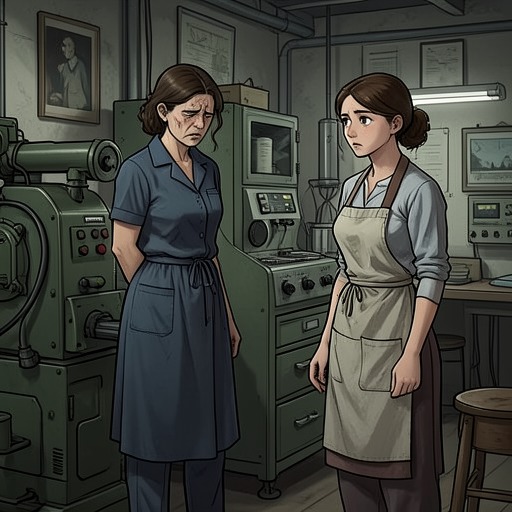
The institution also frustrates women’s efforts to establish a professional life. Some young women begin to pursue studies or work but do not persist, anticipating that their interests will be subordinated to a husband’s career and that their wages will merely supplement the household income. Even a woman with a serious profession may not receive the same social advantages as a man: the example given is that a lawyer’s wife is entitled to a pension after her husband’s death, while a woman lawyer is prohibited from paying an equivalent pension to her husband. Formal work, then, does not automatically place spouses on an equal footing.
For women who achieve genuine professional independence, employment can still become an additional source of fatigue when it is added to marriage rather than accompanied by a redistribution of household duties. The birth of a child often forces a woman back into the role of matron, and reconciling work and motherhood remains difficult. The desired alternative is not simply the right to hold a job, but a life in which family responsibilities and professional commitments can coexist without exhausting effort or the routine sacrifice of one partner’s prospects.
This unequal arrangement is also presented as a source of distress for men. A husband may feel burdened by a dependent wife and believe himself oppressed, yet the book locates the deeper cause in a social code built around male interests, which has shaped marriage and the feminine condition to the detriment of both partners. The claim that women are difficult dependents is therefore not treated as a reason to preserve the arrangement: women’s dependence, the argument runs, is produced by their exclusion from independent activity. Changing marriage requires ending its status as a woman’s career and giving her meaningful work and a life beyond reliance on a husband.
Structural limits and the meaning of freedom
The concept is grounded in the book’s broader account of freedom. A person realizes freedom through projects that reach beyond the present; when women are compelled to assume the position of the Other, their possibilities are restricted by a situation that makes them dependent on male recognition and support. Marriage as a career is one mechanism of that restriction: it offers an answer to insecurity while directing women toward a role defined in relation to a husband and household.
The book does not reduce women’s position to biology or to economic class alone. Social conditions can change the practical significance of physical differences: modern machinery can make strength less decisive in work, while public support for pregnancy and child care can ease maternal burdens. But economic development by itself does not guarantee equality. The argument also considers the cultural and institutional power that assigns women domestic responsibilities, and the fact that reproduction cannot simply be treated as another job. Women’s capacity to work matters, but so do the conditions under which they bear children, care for families, and exercise freedom in intimate life.
Marriage as a woman's career consequently names both a survival strategy and a trap in a society where independent livelihoods, sexual autonomy, and social standing remain unequally available. Its apparent advantages—the promise of support, respectability, and a recognized place in adult life—are inseparable from the loss of alternatives that makes those advantages so compelling. The possibility of a more equal relationship depends on women being able to sustain lives and projects of their own, rather than having marriage stand in for a career, an identity, and the material basis of existence.